Thursday, April 7, 2011

2011 Saturn Ion

2011 Saturn Ion is a compact sedan or a coupe that emphasizes style and innovation. 2011 Saturn Ion features some significant updates, including higher-grade interior fabrics and richer-looking interior trim in more harmonious colors. Additional sound-deadening material brings a quieter cabin. The stereo systems have been improved and are available with an MP3 player, XM Satellite Radio, and a six-CD changer. 2011 Saturn Ion steering has been re-calibrated for improved road feel at speed. Both of the available automatic transmissions have been refined as well. 2011 Saturn Ion is available as a four-door sedan, or as an innovative coupe with two reverse-opening auxiliary rear doors.
 
The sedan is offered in three trim levels. The coupe is available in the upper two levels. Saturn does things a little differently from other car manufacturers, so instead of assigning arbitrary letter combinations to each trim level, Saturn calls them simply Ion 1, Ion 2, and Ion 3.

All 2011 Saturn Ion models are powered by the same 2.2-liter four-cylinder engine, rated 140 horsepower. A five-speed manual transmission is standard. Automatic transmissions are available, but Saturn installs different units in the sedan and the coupe. Sedans use a five-speed automatic, which is unusual in this price range. Coupes use a continuously variable transmission (VTi, Saturn calls it) that uses pulleys and belts instead of gears to maximize smoothness and efficiency. Anti-lock brakes (ABS) with traction control are available on all other 2011 Saturn Ion. Head curtain air bags that protect both front and rear-seat passengers in a side impact are an unusual option in this price class. CD and CD/MP3 systems are available on Ion 1 and Ion 2. XM Satellite Radio and On Star are offered at levels 2 and 3. A convenience package adds cruise control plus power locks, mirrors, and windows to Ion 2. A power sunroof is offered on all models except the Ion 1 sedan. Leather upholstery is available on Ion 3. It’s more than four inches taller than the previous-generation S-Series that it replaced. saturn ion1 2011 Saturn IonThe 2011 Saturn Ion roof curves heavily down to the high trunk line almost giving it the appearance of a hatchback rather than a traditional sedan. The look is contemporary and not that dissimilar from the Nissan Altima and Volkswagen Passat, both lauded for their design. 2011 Saturn Ion maintains the Saturn tradition of attaching composite polymer body panels to a substantial steel space-frame. The polymer panels can’t rust and, because they are slightly resilient, they resist the minor impacts that leave small dents and dings in sheet metal. The down side is that the Saturn’s panels look thicker than steel sheet and gaps between body parts have to be greater to allow for expansion in hot weather. Another benefit of the composite panels is that they are relatively easy to replace. Saturn has exploited this advantage on the Ion by offering alternatively colored roof rails that owners can easily install to customize their car’s appearance. All 2011 Saturn Ion come with body-color roof rails, but Nickel-Silver rails are available for the coupe and the sedan, and Charcoal rails are available for the sedan.

Source: Reviewcar.com

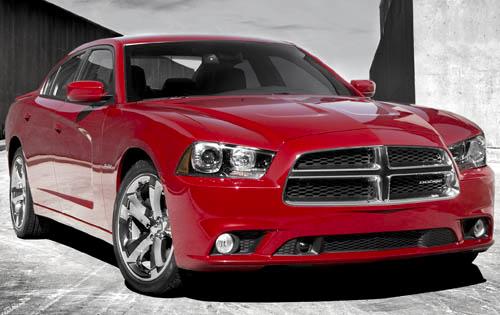
2011 Dodge Charger

Is there an angrier car on the road than the Dodge Charger?


The 2011 Dodge Charger receives a number of significant upgrades, including freshened styling, higher-quality interior materials, an all-new and more powerful 3.6-liter V6 engine, a retuned suspension, electric-assist power steering, more standard features and a new electronic interface. The high-performance SRT8 model has been dropped for now, but it's likely to return in the future.

One of the most significant of these changes is the introduction of an all-new 3.6-liter Pentastar V6 that takes the place of the outgoing model's 2.7-liter and 3.5-liter V6s. With 292 horsepower on tap -- an increase of 114 hp and 42 hp respectively over the previous V6 engines -- this new powertrain becomes a fine alternative to the Charger R/T's carryover 5.7-liter V8.

The Charger's interior has also received a makeover, with handsome styling and soft-touch materials replacing the bland look and hard plastics that gave the previous cabin a low-budget feel. The list of standard features and options has been substantially upgraded as well, and now includes the latest high-tech bells and whistles, including the Sirius Travel Link service that accesses info from local gas prices to live weather radar images. Equally nifty is the available Cross Traffic Alert system that makes backing out of a blind parking space much less stressful.

A careful mining of  Dodge’s past gives the new car enough retro touches to tie it to the Chargers of  yore. But Dodge didn’t throw out what so many people loved about the previous generation. Though they’ve been tweaked a bit, the forward-canted crosshair grille, the glaring headlights, and the fighting-bull stance remain. Yes, the Charger’s still a bad-ass, but it’s now a better car to live with. In other words, it is managing its anger quite well. 

Tuesday, April 5, 2011

Exhaust system

An exhaust system is usually tubing used to guide reaction exhaust gases away from a controlled combustion inside an engine or stove. The entire system conveys burnt gases from the engine and includes one or more exhaust pipes. Depending on the overall system design, the exhaust gas may flow through one or more of:
  • Cylinder head and exhaust manifold
  • A turbocharger to increase engine power.
  • A catalytic converter to reduce air pollution.
  • A muffler (North America) / silencer (Europe), to reduce noise.

Design criteria

An exhaust pipe must be carefully designed to carry toxic and/or noxious gases away from the users of the machine. Indoor generators and furnaces can quickly fill an enclosed space with carbon monoxide or other poisonous exhaust gases if they are not properly vented to the outdoors. Also, the gases from most types of machine are very hot; the pipe must be heat-resistant, and it must not pass through or near anything which can burn or can be damaged by heat. A chimney serves as an exhaust pipe in a stationary structure. For the internal combustion engine it is important to have the Exhaust System "Tuned" (refer to tuned pipe) for optimal efficiency. Also this should meet the regulation norms maintained in each country.In Europeon countries, EURO 5, India BS-4 etc.,


Exhaust System Tuning

Many automotive companies offer aftermarket exhaust system upgrades as a subcategory of engine tuning. This is often fairly expensive as it usually includes replacing the entire exhaust manifold or other large components. These upgrades however can significantly improve engine performance and do this through means of two main principles:
  • By reducing the exhaust back pressure, engine power is increased in four-stroke engines
  • By reducing the amount of heat from the exhaust being lost into the underbonnet area. This reduces the underbonnet temperature and consequently lowers the intake manifold temperature, increasing power. This also has positive side effect of preventing heat-sensitive components from being damaged. Furthermore, keeping the heat in the exhaust gases speeds these up, therefore reducing back pressure as well.
Back pressure is most commonly reduced by replacing exhaust manifolds with headers, which have smoother bends and normally wider pipe diameters.
Exhaust Heat Management is the term that describes reducing the amount of exhaust heat loss. One dominant solution to aftermarket upgraders is the use of a ceramic coating applied via thermal spraying. This not only reduces heat loss and lessens back pressure, but provides an effective way to protect the exhaust system from wear and tear, thermal degradation and corrosion.

DC Sports

DC Sports Exhaust

  • Gain horsepower and get the sport compact sound you've been craving by installing a DC Sports exhaust system
  • A DC header gets gasses out of your engine more efficiently resulting in torque and horsepower across the rev range
  • By installing in the stock locations, DC Sports exhaust components save you hours on installation time
  • Choose a stainless DC Sports exhaust system for the ultimate in good looks and durability

DC Sports Exhaust

We don't know why more exhaust manufacturers don't take a page from the DC Sports exhaust system catalog and build their systems to fit in the stock locations. After all, it doesn't matter how good a system performs if it takes days of bending and welding to get it to fit. A DC Sports exhaust utilizes factory hangers and mounting points to ensure you get a great, out-of-the-way fit from your new components. From there, DC Sports exhaust products build in all the premium features you'd expect from a high end performance exhaust system. For example, you'll find stainless steel used throughout every DC Sports exhaust system, with CNC mandrel bends providing large, high-flow curves. Anywhere hardware is required for your installation, the DC Sports exhaust kit you receive will include it. The muffler used on DC Sports exhaust systems is a hand-welded high flow design with a wide open core for the best possible gas flow with legal sound output. At the end, your DC Sports exhaust will have a polished stainless tip with the instantly recognizable DC Sports exhaust logo. Whatever you drive and whatever look you're going for, there's a DC Sports exhaust for you: Single canister, dual canister, and even twin canister tandem applications are in stock and ready to go, so get your DC Sports exhaust today and get ready for some real performance.

DC Header

You know you have to have a DC header on your sport compact to really get the most out of your engine's abilities. All the air you can squeeze into the cylinders doesn't make a bit of difference if the burned gasses can't get out efficiently. And guess what: your factory manifold isn't efficient. A DC header, on the other hand, is made up of individual runners heading back to a common collector. Compare that to your stock manifold, which most likely looks like a log that all the cylinders have to dump into. Since each cylinder gets its own individual exhaust pipe on the DC header, you avoid competing exhaust pulses, backpressure, and unequal pressures, all of which can stop the exhaust in its tracks. DC header designs include four-into-one, four-into-two, and various racing configurations. Which DC header is right for you depends upon how you intend to use your car. For street and strip combo use, choose a DC header that gives good low-end torque at the expense of absolute peak horsepower. If you road race or drag race, high-end power may be what you want from your DC header, torque or not. No matter which you choose, you'll find stainless steel, CNC mandrel bends, and thick, welded flanges across the entire DC header lineup. That way, you can choose the performance characteristics you want and always be assured that your DC header will deliver quality workmanship.

DC Sports Header

Turbulence and backpressure are the big enemies of your exhaust system, since they rob horsepower by preventing smooth exhaust gas exit. Your ally is found in the DC Sports header. A DC Sports header bolted on in place of your stock exhaust manifold can improve gas flow by a factor of four, which means low restriction, low turbulence, and almost zero backpressure. How? Rather than dumping all the exhaust into a single plenum like a log-style manifold does, a DC Sports header gives each exhaust pulse unimpeded access to the collector several feet away. As it travels down its individual tube in the DC Sports header, the exhaust pulse loses energy and slows down, so that by the time it reaches the collector it no longer has the energy to cause backpressure all the way back up at the cylinder head. Thus the next exhaust pulse is free to race down the tube without restriction. A properly-designed unit like the DC Sports header can even use the pressure waves to suck subsequent exhaust pulses from the cylinder—sort of like a reverse turbocharger. The scavenging effect of a DC Sports header is particularly important if you're running forced induction or nitrous, due to the high volume of exhaust gas. A DC Sports header will ensure that you get the most out of your induction system. And with stainless steel used throughout, thick, laser cut flanges, and machine welds, your DC Sports header will help you get the most for a long time to come.

A 1 Cardone Alternator

The A1 Cardone product line has expanded to include products manufactured new by Cardone, so now it is possible to buy an A1 Cardone alternator, made with the quality and durability you've come to associate with the A1 Cardone name. In the same way that A1 Cardone remanufactures parts with an eye on strengthening the basic design, they make their line of new parts, such as the A1 Cardone Alternator, with an eye on creating efficient, long lasting automotive parts worthy of the decades of success and satisfaction symbolized by the Cardone name. An A1 Cardone alternator, like all other A1 Cardone parts, is made to the highest industry standards, using the best manufacturing materials available. Using cheap or less than high quality materials runs the risk of creating products that will hold up well under day-to-day driving conditions, and that is not a risk that A1 Cardone is prepared to take, not with an A1 Cardone alternator or any other part bearing the Cardone name. The rigorous testing that each part manufactured by A1 Cardone undergoes ensures that an A1 Cardone alternator will be performing its essential tasks dependably for many miles to come. You can trust an A1 Cardone alternator to see to it that your battery maintains its charge and that the electrical systems of your car will receive the power they need for optimum performance. Because a poorly performing alternator can strain the automotive systems that depend upon it, it only makes sense to take advantage of the proven A1 Cardone quality by using an A1 Cardone alternator in your vehicle.